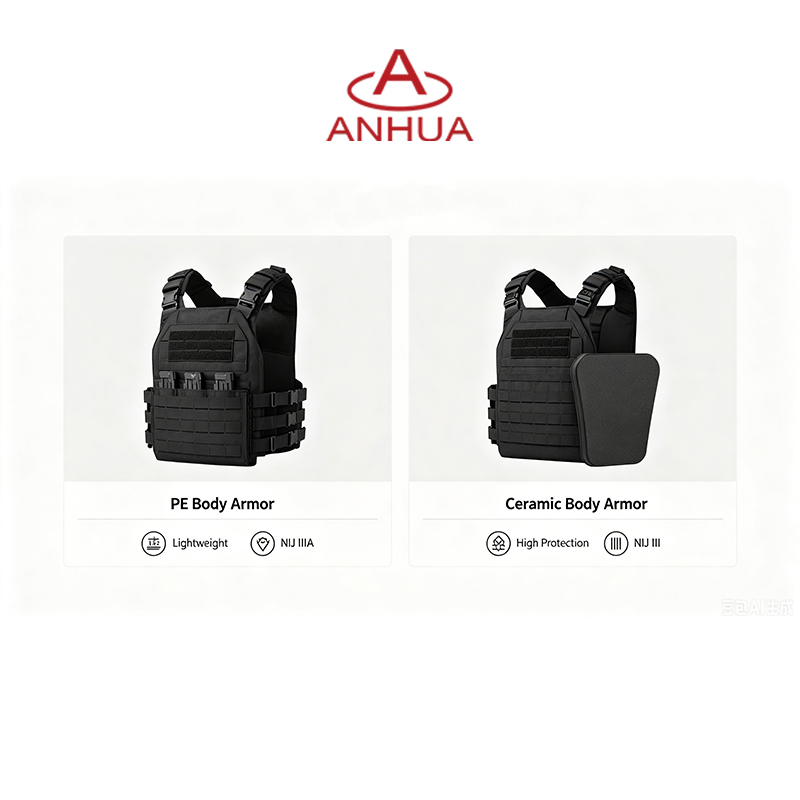
Global law enforcement buyers often compare ceramic and PE body armor. In fact, the two mainstream ballistic solutions serve different threat scenarios, with no absolute better option. Jiangsu Anhua Police Equipment Manufacturing Co., Ltd. professionally explains their core differences for your accurate selection.
1. Protection Level Differences
PE Body Armor: Made of UHMWPE fiber, it provides NIJ II / IIIA protection against pistol rounds, shotgun shells and fragments, ideal for daily patrols and routine security.
Ceramic Body Armor: Adopts composite structure, supporting NIJ III / IV high-level protection. It resists 5.56mm, 7.62mm rifle rounds and armor-piercing bullets for high-risk tactical and counter-terrorism missions.
2. Core Performance Contrast
Weight & Mobility: PE armor is lightweight and flexible for long-duration mobile tasks. Ceramic armor is rigid and heavy, focusing on ultimate ballistic protection.
Durability: PE armor supports multi-hit resistance, with a 5–8 year service life and low maintenance. Ceramic armor is brittle, fails after single bullet impact, and only lasts 3–5 years.
3. Selection Guide
PE Armor: Best for urban security, daily patrols and conventional pistol threat defense.
Ceramic Armor: Suitable for border patrol, SWAT operations and anti-armor-piercing missions.
4. Conclusion
Choose lightweight, durable PE armor for daily law enforcement; pick high-protection ceramic armor for high-threat combat scenarios.
Reliable Police Armor Manufacturer
Jiangsu Anhua Police Equipment Manufacturing Co., Ltd. is a professional ballistic armor manufacturer with nearly 30 years of experience. We supply standard and customized NIJ-certified PE & ceramic body armor. With complete ISO and safety production certifications, we support global wholesale and OEM/ODM services for police and military clients.
Final Verdict
Daily patrol & mobility: PE Armor
High-risk rifle threats: Ceramic Armor